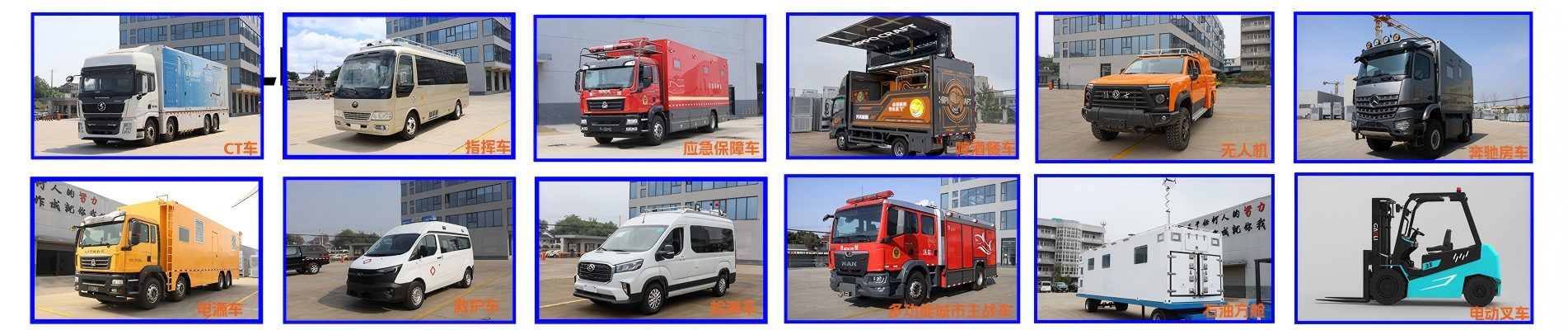
Solution Overview
Refitted on a German MAN chassis, the Gaoliweima AP50 Compressed Air Foam Fire Truck acts as the primary urban fire fighting vehicle. It is applicable to comprehensive fire rescue scenarios including fire stations in large and medium-sized cities, chemical industrial parks, commercial clusters, high-rise buildings and old urban districts. Equipped with an imported compressed air foam system, large-capacity storage tanks for water, Class A foam and Class B foam, an intelligent integrated control system, a vehicle-mounted lifting lighting platform and standardized equipment compartments, the vehicle integrates conventional fire suppression, Class A solid fire containment, response to flammable & explosive liquid Class B fires, night emergency lighting and on-site equipment support functions. It greatly improves the disposal efficiency of various fire incidents and effectively solves practical pain points of traditional single water tank fire trucks, such as insufficient fire suppression performance, limited adjustable range of foam mixing ratio, disorganized equipment storage, lack of on-site fire lighting and easy corrosion & deformation of vehicle bodies.
I. Core Configurations · Efficiency Improvement & Risk Avoidance Analysis
1. High-Strength Frameless Integrated Aluminum Alloy Body Structure
✅ Efficiency Improvement
Adopting frameless, weld-free one-step forming aluminum alloy technology, the body features excellent corrosion resistance and deformation resistance with a designed service life of up to 15 years. Eight groups of lightweight aluminum alloy roller shutter equipment compartments are arranged on both sides of the body, with a modular layout of trays, rotating brackets and hose frames. All equipment is stored in partitioned areas for firefighters to access rapidly. The compact body with overall dimensions of 8270×2520×3480mm enables flexible movement on urban roads and narrow alleys for mobile firefighting operations.
⚠️ Risks Avoided
Traditional steel compartments are prone to rust perforation, bulging and deformation after long-term contact with fire extinguishing agents and rainwater, resulting in frequent maintenance. Poorly arranged simple compartments waste valuable time searching for equipment during fires. Bulky vehicle bodies face mobility restrictions on congested urban roads and old streets, delaying arrival at fire scenes.
2. Highly Intelligent Integrated Operating System
✅ Efficiency Improvement
The integrated centralized control panel supports one-key water discharge, one-key foam output, one-key pipeline flushing, pressure stabilization control and engine throttle adjustment. Simplified operation procedures reduce manual steps and shorten preparation time from dispatch to foam/water jetting. Visual real-time system status display lowers the learning threshold for new operators.
⚠️ Risks Avoided
Outdated fire trucks have scattered control buttons and complicated workflows requiring multi-person coordination, slowing emergency response. Manual misoperation may cause unstable pipeline pressure and accidental foam ejection. Without centralized real-time monitoring, equipment faults cannot be alerted in advance.
3. Multi-Medium Fire Extinguishing Agent Storage System (4200kg Water + 300kg Class A Foam + 600kg Class B Foam)
✅ Efficiency Improvement
Carrying three types of extinguishing agents simultaneously, one single truck can handle structural solid fires, wood stacking fires and gasoline & chemical liquid fires. There is no need to dispatch multiple fire trucks in formation to carry different media; complex multi-type fire incidents can be independently controlled by one vehicle. External LED liquid level displays on both sides of the tanks allow operators to check residual agent reserves intuitively outside the vehicle to facilitate on-site tactical scheduling.
⚠️ Risks Avoided
Conventional water tank fire trucks only rely on clean water and deliver poor suppression effects on oil fires. Single foam fire trucks cannot handle solid combustible fires. Inability to monitor real-time liquid levels may lead to sudden depletion of extinguishing agents mid-operation.
4. Imported Compressed Air Foam Fire Suppression System
✅ Efficiency Improvement
Compressed air flow reaches 3600 L/min, with a stepless adjustable foam mixing ratio ranging from 0.1% to 10%. Dry or wet foam can be flexibly generated according to fire conditions. Matched with a fire monitor with a rated flow of 48 L/s, the water jet range is 70 meters and the foam jet range is 60 meters, supported by a 60 L/s fire pump for long-distance continuous agent supply. The foam boasts strong adhesion, heat insulation and anti-reignition performance, drastically cutting agent consumption and extending continuous operation duration.
⚠️ Risks Avoided
Ordinary foam systems only offer fixed mixing gears that cannot adapt to different combustible materials. Pure water used on flammable liquid fires easily triggers spreading flowing fires. Insufficient foam jet range forces firefighters to operate too close to flames and raises on-site safety risks.
5. Vehicle-Mounted Lifting Lighting System (5kW Generator, 8m Lifting Mast, 4×600W LED Lamps)
✅ Efficiency Improvement
The lifting lighting tower reaches a maximum height of 8 meters above ground, providing wide-range illumination for fire scenes, collapse accidents and night emergency rescue sites. The independent on-board generator operates without external municipal power supply, delivering sufficient visibility for night search & rescue, forced entry and casualty evacuation to support uninterrupted night rescue operations.
⚠️ Risks Avoided
Vehicles without built-in lighting only rely on portable handheld lamps with limited coverage and time-consuming setup. Poor visibility in total darkness increases search difficulty and risks missing trapped personnel.
6. Rated 50kN Traction System
✅ Efficiency Improvement
Built-in traction capacity enables on-site towing of broken-down vehicles and clearance of road obstacles to unblock rescue passages. Fire suppression and obstacle removal can be conducted simultaneously at accident scenes without additional dispatch of tow trucks.
⚠️ Risks Avoided
Vehicles occupying roadways at traffic accident sites block rescue access. Lack of traction equipment prevents fire trucks from approaching ignition points, missing the optimal fire suppression window.
II. Overall Value Summary
Integrating a reliable MAN commercial chassis, corrosion-resistant integrated aluminum alloy body, intelligent integrated electric control system, three-medium storage tanks, stepless adjustable compressed air foam system, lifting emergency lighting and on-board traction device, the AP50 Compressed Air Foam Fire Truck builds a comprehensive urban main battle rescue platform:
- Improved emergency response efficiency: Centralized intelligent automatic controls simplify operation workflows, modular equipment compartments cut equipment retrieval time, and the compact body ensures urban mobility for fast arrival at operation sites.
- Expanded fire disposal capacity: The combined water/Class A foam/Class B foam medium setup covers both solid and liquid fires with a single vehicle, reducing the number of fire trucks required in formation. Compressed air foam suppresses re-ignition, lowers agent consumption and extends continuous operation time.
- Comprehensive full-scene support capability: Built-in high-altitude lighting and obstacle-clearing traction support fire suppression, night rescue and road clearance, adapting to compound disasters including fires, traffic accidents and building collapses.
- Reduced full-lifecycle operation & maintenance costs: The corrosion-resistant, deformation-resistant aluminum alloy compartment delivers stable service for up to 15 years, cutting frequencies of major compartment overhauls and sheet metal replacement.
- Lower on-site operation risks: Long-range fire monitors maintain a safe working distance for firefighters; visual liquid level monitoring and system pressure early warning prevent sudden hazards such as pipeline overpressure and abrupt agent cut-off.