leave a message
leave a message
If you are interested in our products and want to know more details,please leave a message here,we will reply you as soon as we can.

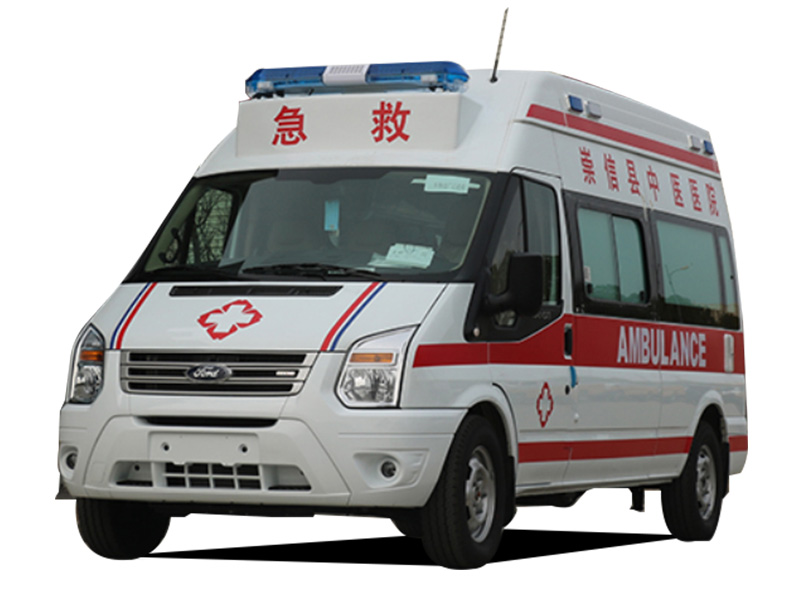
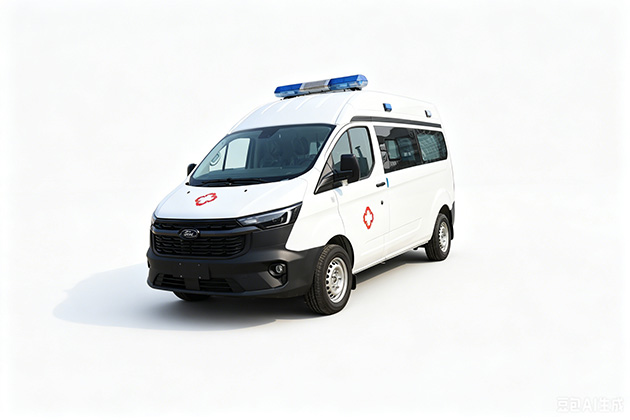
Ford Transit Ambulance

Refitted on Ford New Transit V362 high-roof gasoline/diesel chassis, this light ambulance can be driven with a C1 license and moves flexibly in narrow urban roads and residential areas.
Its medical cabin adopts seamless antibacterial ABS interior, equipped with automatic loading stretcher, dual oxygen supply system, multi-layer medical storage cabinets and rear-facing medical seat. It comes with a 3000W–4000W off-grid inverter, independent heating & cooling air conditioner, UV disinfection lamp and optional negative pressure system for infectious patient transport.
Complete standard emergency gear includes defibrillator monitor, transport ventilator and intercom system. With nationwide Ford service outlets and low maintenance cost, it is widely used in pre-hospital rescue, inter-hospital patient transfer and on-site medical support for events. Two versions (standard monitoring type & negative pressure isolation type) are available.
  • Order(MOQ) :

    1 unit
  • Payment :

    Telegraphic Transfer
  • Product Origin :

    Nanjing City, Jiangsu Province
  • Shipping Port :

    Nanjing City, Jiangsu Province
  • Lead Time :

    3 to 6 months
  • 1. Vehicle Chassis Basis: Ford New Transit V362 High-Roof Class II Chassis

    This vehicle is refitted based on the high-roof chassis of Ford New Transit V362, available in both diesel and gasoline versions. It serves as a mainstream light ambulance for pre-hospital emergency rescue in China, well-suited for narrow passages including urban lanes, rural country roads and residential compounds.
    Overall dimensions: 5341×2032×2407 mm. The high-roof layout creates sufficient internal height inside the medical cabin, allowing medical staff to conduct rescue operations while half-standing. It is a blue-plate vehicle operable with a C1 driving license, free from urban traffic restrictions and easy to park.
    Power options include a 2.0T diesel engine and a 2.0T gasoline engine. The diesel variant delivers strong torque and low fuel consumption for long-distance emergency missions; the gasoline variant operates quietly without pungent exhaust fumes, making it perfect for short-distance urban patient transport.
    Standard driving safety configurations cover factory-installed ABS and ESP vehicle stability control system, reversing radar, reversing camera and EDR event data recorder. An integrated long-row blue LED emergency strobe light is mounted on the roof, with auxiliary warning flashers fitted on both sides and the rear of the vehicle. Standard red medical cross logos ensure high visibility during night-time emergency calls.
    Exterior design: The vehicle adopts dedicated medical pure white paint finish, with tinted privacy medical windows to block outside sight and protect patient privacy. A physical partition separates the driving cab and medical cabin, each equipped with independent factory heating and air conditioning systems.
    Chassis advantages for emergency use: Ford Transit chassis boasts a huge market stock, with 4S service stores and maintenance outlets covering cities, counties and towns nationwide. Universal spare parts help cut overall maintenance costs. Its lightweight body and flexible steering enable smooth passage through old urban blocks, aged residential quarters and underground parking lots. Compared with large IVECO ambulances, it is more ideal for short-distance urban 120 pre-hospital rescue.

    2. Integrated Refitted Structure of Medical Cabin (Core Rescue Operation Area)

    The medical cabin features an integrated seamless molded ABS medical interior with rounded corners without blind spots for disinfection. The material withstands repeated sterilization with alcohol and chlorine-containing disinfectants, with waterproof and antibacterial properties. Anti-slip medical PVC flooring is laid on the ground, which can be wiped clean of liquid stains, fully complying with hospital infection prevention and control standards.

    2.1 Zoned Functional Layout (Standard Monitoring Type)

    (1) Main Stretcher Transfer Passage

    The central passage is equipped with a fixed platform for automatic loading stretchers to realize fast loading and unloading of patients. Lock limit devices prevent the stretcher from shaking during driving, suitable for transporting recumbent severely injured, post-operative and elderly patients. Multiple quick-mount guide rails are reserved for rapid installation of patient monitors, transport ventilators and negative pressure suction devices.

    (2) Vertical Medical Cabinet Group on the Left

    Layered closed storage spaces are arranged from top to bottom: Overhead lockers store emergency supplies, sterile dressings and infusion materials. The middle compartment holds two standard 10L medical oxygen cylinders with dual pressure reducing valves, which automatically switch to provide uninterrupted oxygen supply. Lower drawers separately store syringes, emergency medicines, disposable protective supplies and sharps recovery boxes.

    (3) Medical Staff & Accompanying Zone on the Right

    A rear-facing medical observation seat with safety belt is installed, enabling medical staff to face patients and monitor vital signs in real time. A double-passenger bench is set beside it for family members to accompany patients. Anti-slip handrails are fitted at the middle and rear doors to ensure safe access for patients.

    (4) Front and Rear Partition System

    A fully enclosed partition separates the driving cab and medical cabin, equipped with scratch-resistant transparent observation window and two-way intercom system for real-time communication between drivers and medical staff. A central electrical control panel integrated above the partition uniformly manages all electrical equipment inside the cabin.

    3. Complete Supporting Emergency Functional Systems

    3.1 Self-Sustaining Power Supply System

    The vehicle is fitted with an integrated 3000W/4000W vehicle inverter charger, matched with a 10-meter waterproof external mains cable. When parked without external power access, it can stably output continuous 220V AC power for ventilators, patient monitors, suction devices, lighting and disinfection equipment. The whole circuit is equipped with branch leakage and overload protection to eliminate short-circuit risks during emergency missions in rainy and snowy weather.

    3.2 Temperature Control, Ventilation and Disinfection System

    An independent rear heating and cooling unit maintains a constant cabin temperature of 22–26℃ in extreme cold or hot weather to improve patient comfort. A top-mounted bidirectional circulating fan continuously replaces stale air inside the cabin. The negative pressure version can be equipped with a medical negative pressure unit to form negative pressure inside the cabin, filtering and blocking the spread of aerosol viruses for transporting febrile and respiratory infectious patients. A timing UV sterilization lamp supports one-click full-cabin disinfection after patient transfer to avoid cross-infection.

    3.3 Full-Range Medical Lighting System

    Multiple soft flicker-free LED ceiling lights are installed inside the cabin, together with dedicated surgical spotlights above the stretcher area to provide shadow-free lighting for infusion and rescue operations. Inspection warning lights on the roof and rear deliver sufficient illumination for field rescue at night.

    3.4 Water Supply and Simple Disinfection Accessories

    An optional small hand-washing disinfection sink and clean water storage tank allow medical staff to disinfect hands before and after operations, meeting hospital infection control requirements.

    4. Standard On-Board First-Aid Equipment & Optional Upgrades

    Standard basic first-aid kits: Dual oxygen cylinder oxygen supply system, automatic loading stretcher, negative pressure suction device, first-aid medicine box, dry powder fire extinguisher, full set of warning lights and intercom communication system.
    High-end optional upgrades (Intensive Care Type):
    1. 1.Vital sign monitoring equipment: Multi-parameter defibrillator monitor, transport ventilator, CPR machine, video laryngoscope;
    2. 2.Epidemic prevention dedicated accessories: Medical negative pressure unit, complete lead protective gear for medical staff, isolation transfer stretcher;
    3. 3.Information equipment: 5G remote consultation terminal, on-board ECG image transmission system, vehicle printer;
    4. 4.Comfort expansion configurations: On-board medical refrigerator, independent oxygen flow regulating terminal for patients.

    5. Core Product Advantages

    1. 1.Excellent urban traffic performance: The short-wheelbase high-roof body is compact and flexible, adaptable to old communities, narrow streets and underground parking lots, achieving faster arrival for short-distance emergency rescue.
    2. 2.Infection-control compliant medical interior: The full seamless antibacterial ABS interior has no disinfection blind spots, meeting hospital and CDC standards for epidemic prevention transfer.
    3. 3.Self-sustaining operation for all scenarios: High-power inverter power supply, independent heating & cooling air conditioner and negative pressure disinfection system support independent emergency transfer in wild areas and towns without supporting medical facilities.
    4. 4.Low maintenance cost: Mass-produced mature Ford chassis with widely available spare parts and nationwide maintenance outlets, suitable for bulk procurement by emergency centers.
    5. 5.Two optional models: Standard monitoring type and negative pressure isolation type, covering daily emergency rescue and public health emergency transfer demands.
    6. 6. Application Scenarios

      1. 1.Pre-hospital emergency treatment and inter-hospital transfer of mild and severe patients for 120 emergency centers;
      2. 2.Daily home visits and follow-up transfer of chronic disease patients for community and township health centers;
      3. 3.Negative pressure isolation transfer of febrile and respiratory infectious patients for disease control centers;
      4. 4.Emergency medical support for large events, scenic spots, construction sites and campus activities;
      5. 5.Short-distance transfer of wounded people at disaster sites such as earthquakes and floods.
leave a message
If you are interested in our products and want to know more details,please leave a message here,we will reply you as soon as we can.
leave a message
If you are interested in our products and want to know more details,please leave a message here,we will reply you as soon as we can.