1. Solution Overview
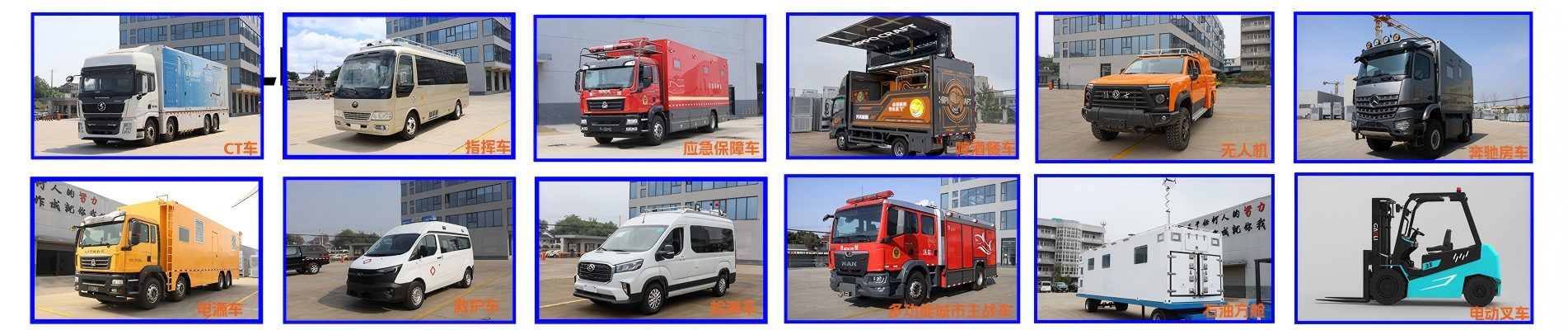
This solution is built around the expandable emergency camping and command support vehicle. Targeting field operation organizations including fire brigades, public security SWAT teams, border defense units, mine emergency response teams, geological survey teams and disaster relief departments, the vehicle integrates on-site accommodation, mobile command office and expandable shelter hardware. It greatly improves the efficiency of field emergency response and addresses common pain points existing in field training, rescue and disaster relief missions.
2. Efficiency Improvements Brought by Core Vehicle Configurations
1. Electric Expandable Shelter Structure
The shelter adopts an electrically side-sliding design. It contracts during transit for a compact vehicle profile and can be electrically expanded on site to increase usable space. Sliding rails and control rods are engineered to withstand extreme temperatures and resist corrosion. Load-bearing frames are pre-embedded inside the compartment, and wiring harnesses are installed with protective casings.
✅
Efficiency Improvement: The design maximizes usable space on a limited chassis while maintaining road mobility. An operational camp can be rapidly set up without erecting temporary tents. Pre-installed pipelines and wiring eliminate on-site temporary cabling work.
⚠️
Risks Avoided:
Temporary field tents require lengthy setup and offer poor resistance against wind and rain. Loose temporary wiring is prone to abrasion and electric leakage. Conventional fixed shelters exceed dimension limits and have limited maneuverability on mountainous and narrow roads. Metal components tend to corrode and compartment seals leak under rainy and snowy weather.
2. Optimized Interior Layout & Integrated Camping Support
The humanized interior layout provides resting space for up to 5 field operators. It is fully equipped with storage systems, air conditioning, lighting, audio-visual equipment, complete water supply and sanitation facilities, as well as electrical safety protection systems.
✅
Efficiency Improvement:
Field staff gain a comfortable resting area to maintain physical fitness for consecutive multi-day rescue and survey missions. Supplies are stored in designated zones so tools and spare parts can be accessed quickly.
⚠️
Risks Avoided:
Without fixed accommodation, staff rest under harsh conditions; fatigue reduces response efficiency. Disorganized storage of equipment delays access to tools during emergencies. Lack of water supply and temperature control severely impacts personnel working conditions under extreme weather.
3. Mobile On-Site Command & Office System
Fitted with a video transmission system, the vehicle supports on-site meetings and real-time office work. It can connect to dedicated dispatching networks to realize remote operational command.
✅
Efficiency Improvement:
A forward command post can be established immediately at accident or disaster sites. No repeated travel to rear headquarters is required. Two-way real-time information exchange enables rapid issuance of response orders.
⚠️
Risks Avoided:
Traditional field operations rely on makeshift command posts with complicated communication wiring. Information transfer between the site and rear command center suffers delays. Without enclosed office space, wind and rain disrupt emergency meetings and situation analysis.
4. Complete Supporting Systems
The vehicle integrates camping equipment, air conditioning, audio-visual systems, water supply, sanitation facilities, power supply, electrical systems, safety protection and auxiliary equipment, including storage cabinets, emergency lights, oxygen supply units, mattresses and bedding.
✅
Efficiency Improvement:
The vehicle is fully operational upon arrival at the site. All living support equipment is pre-installed, removing the need to transport large volumes of separate supplies. A single vehicle fulfills all on-site living support demands for deployed personnel.
⚠️
Risks Avoided:
Deploying multiple vehicles to transport tents, water-power equipment and daily supplies leads to high transportation costs and long preparation cycles. Insufficient water and power supply in the field prevents long-term continuous on-site duty.